
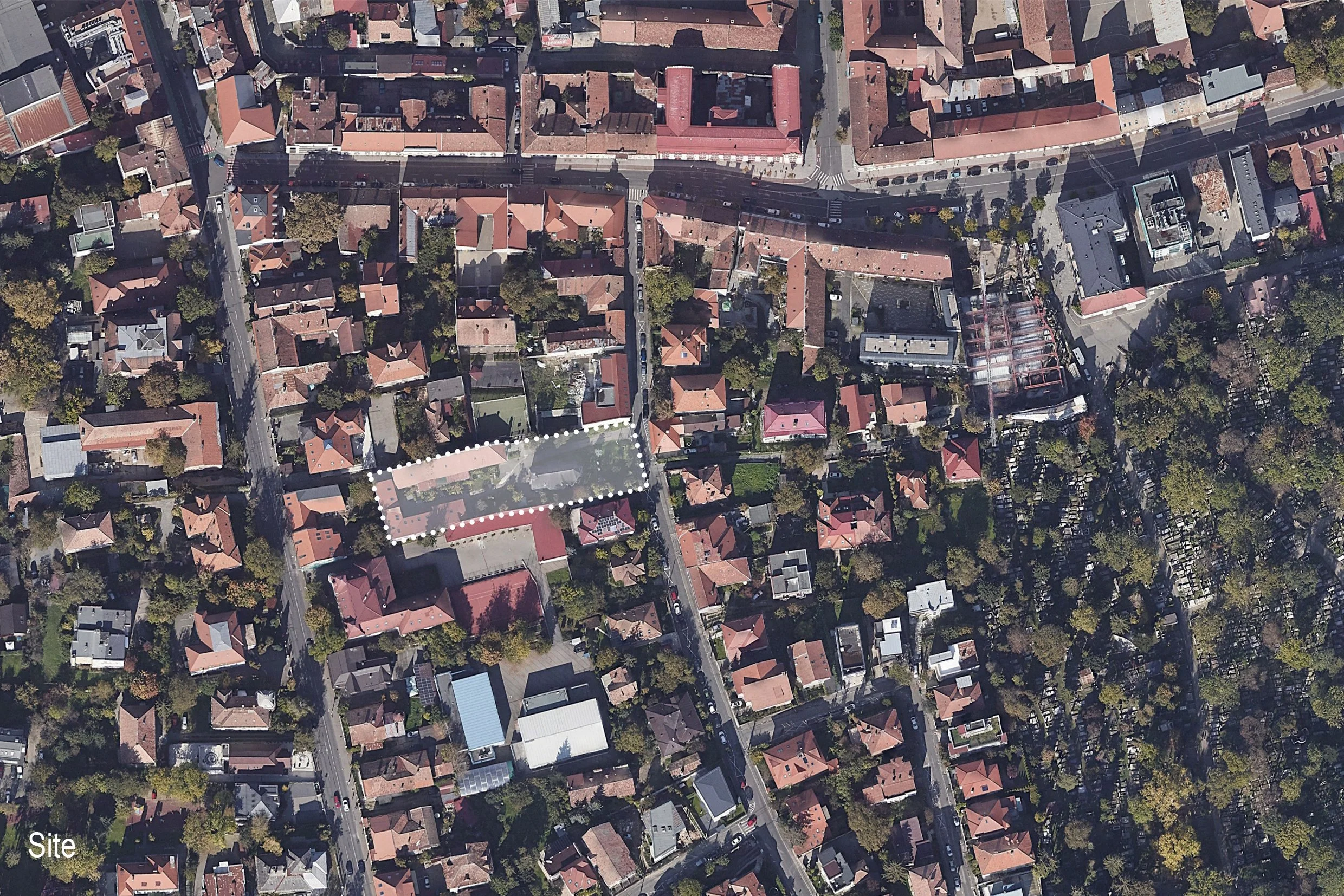
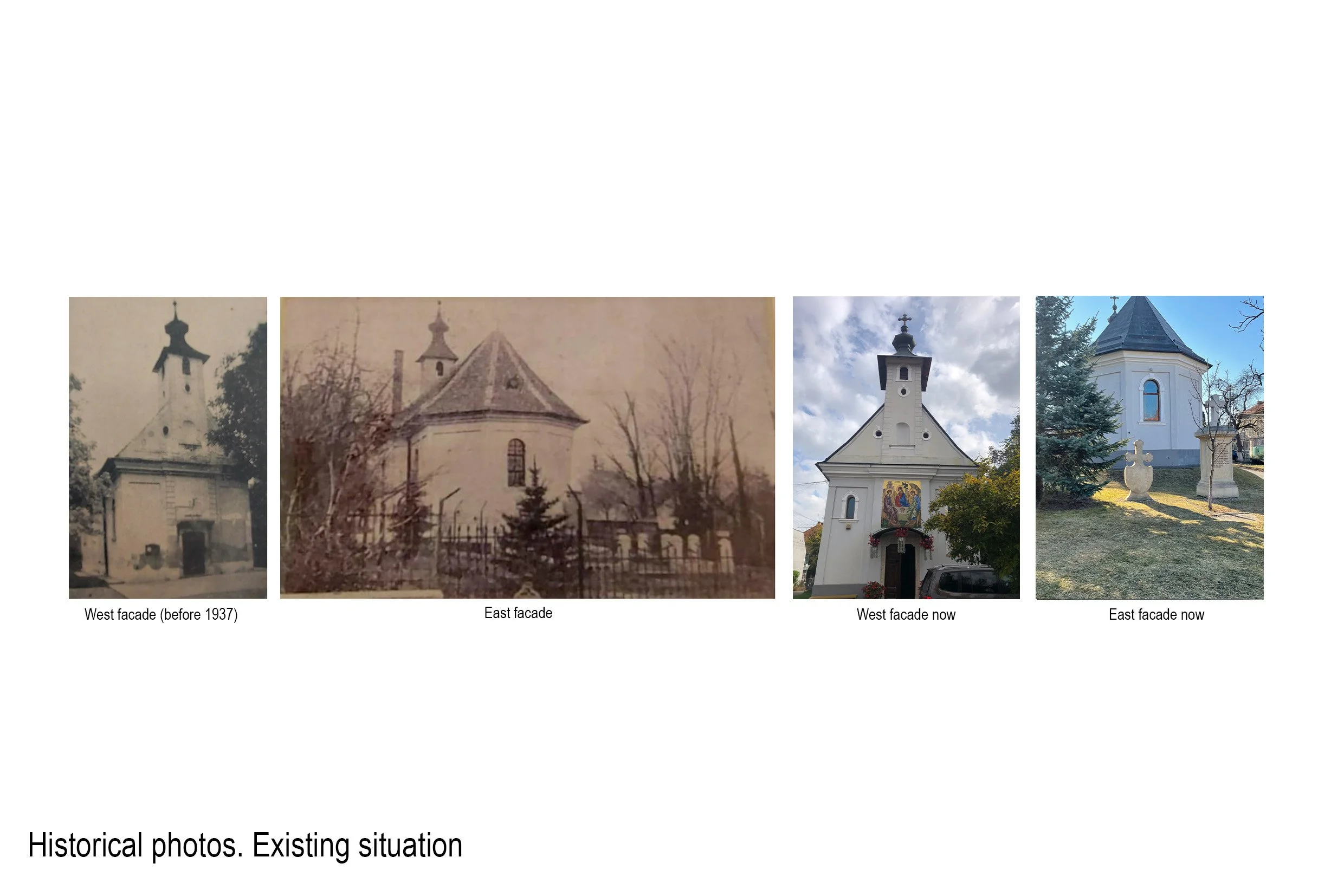

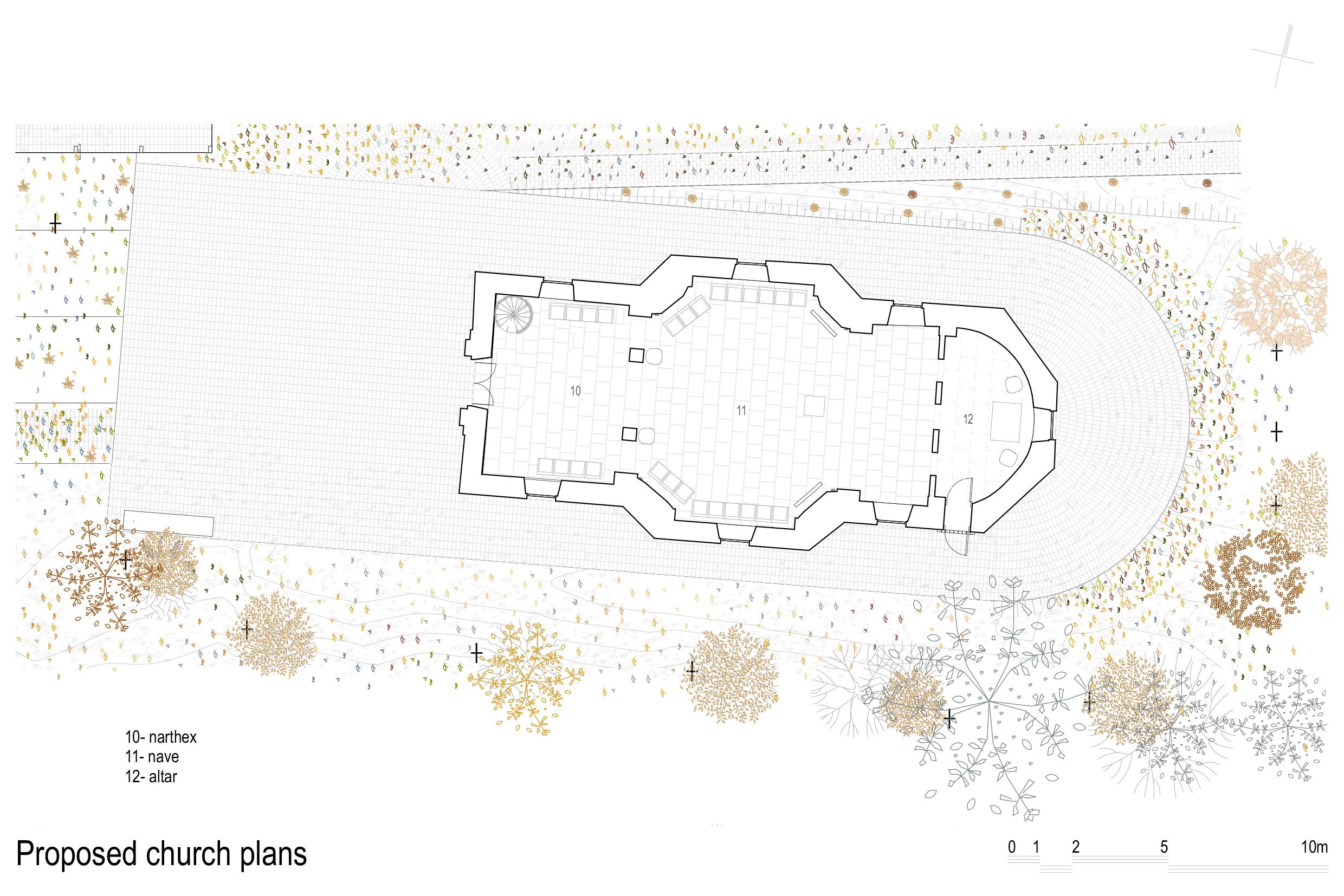
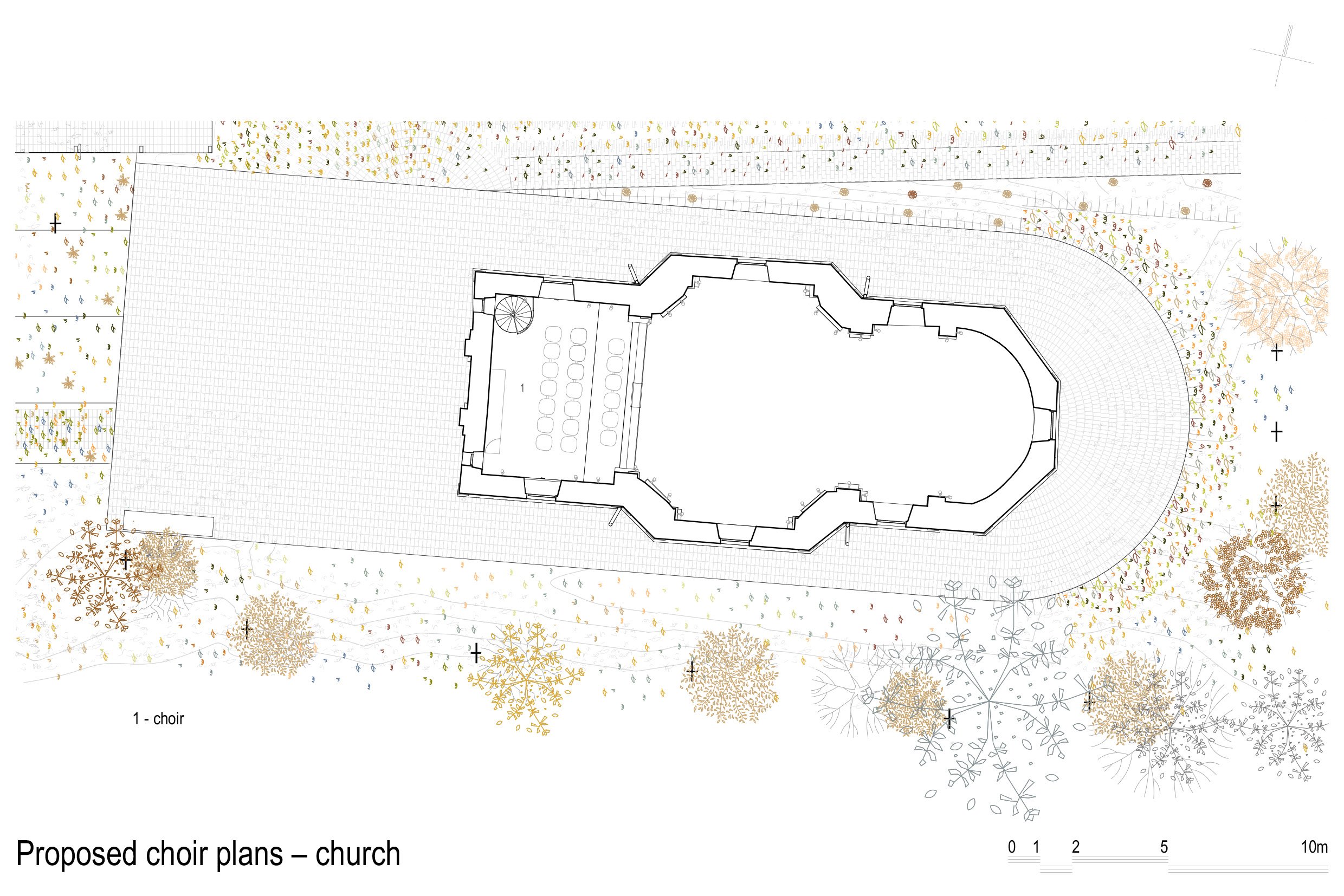
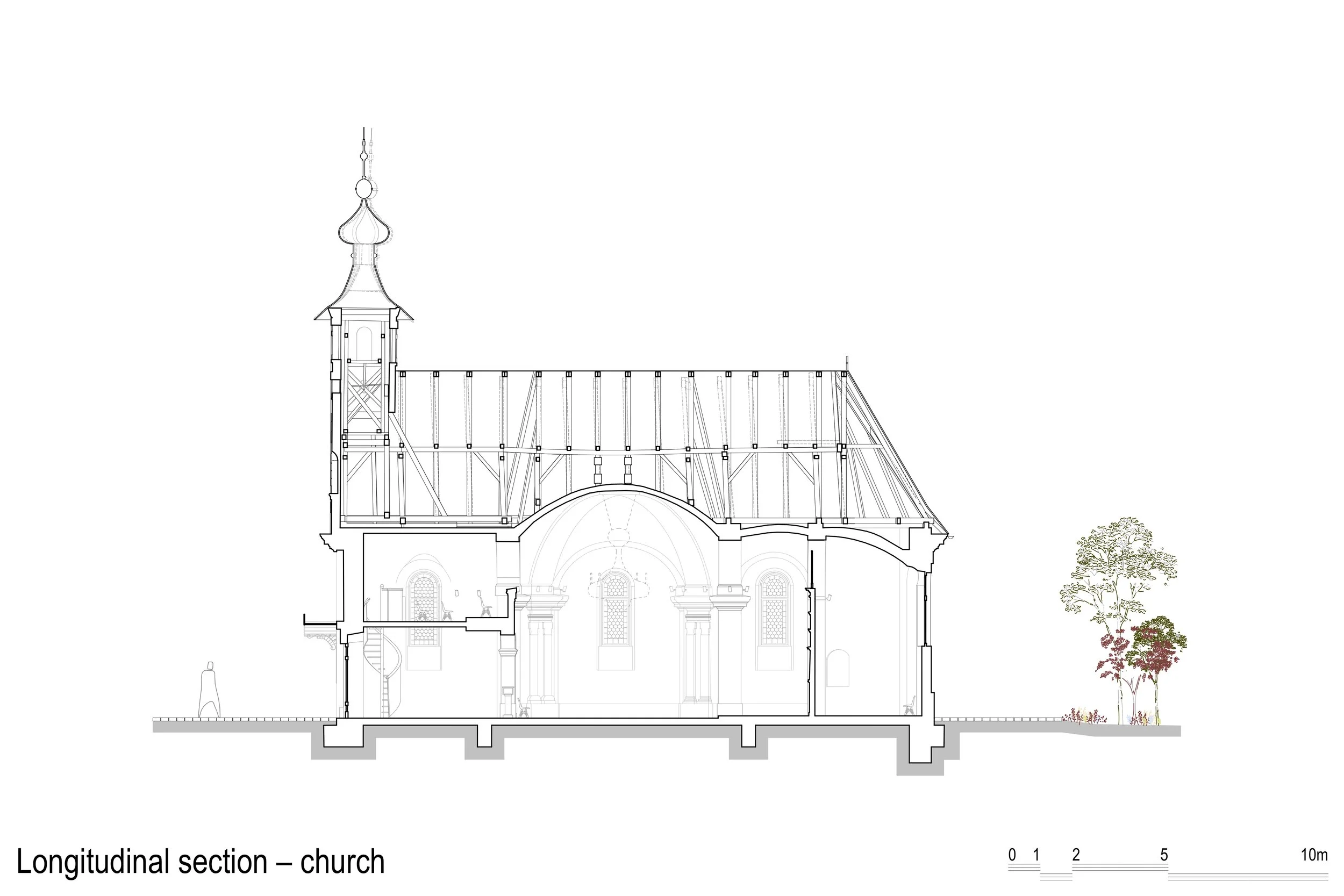
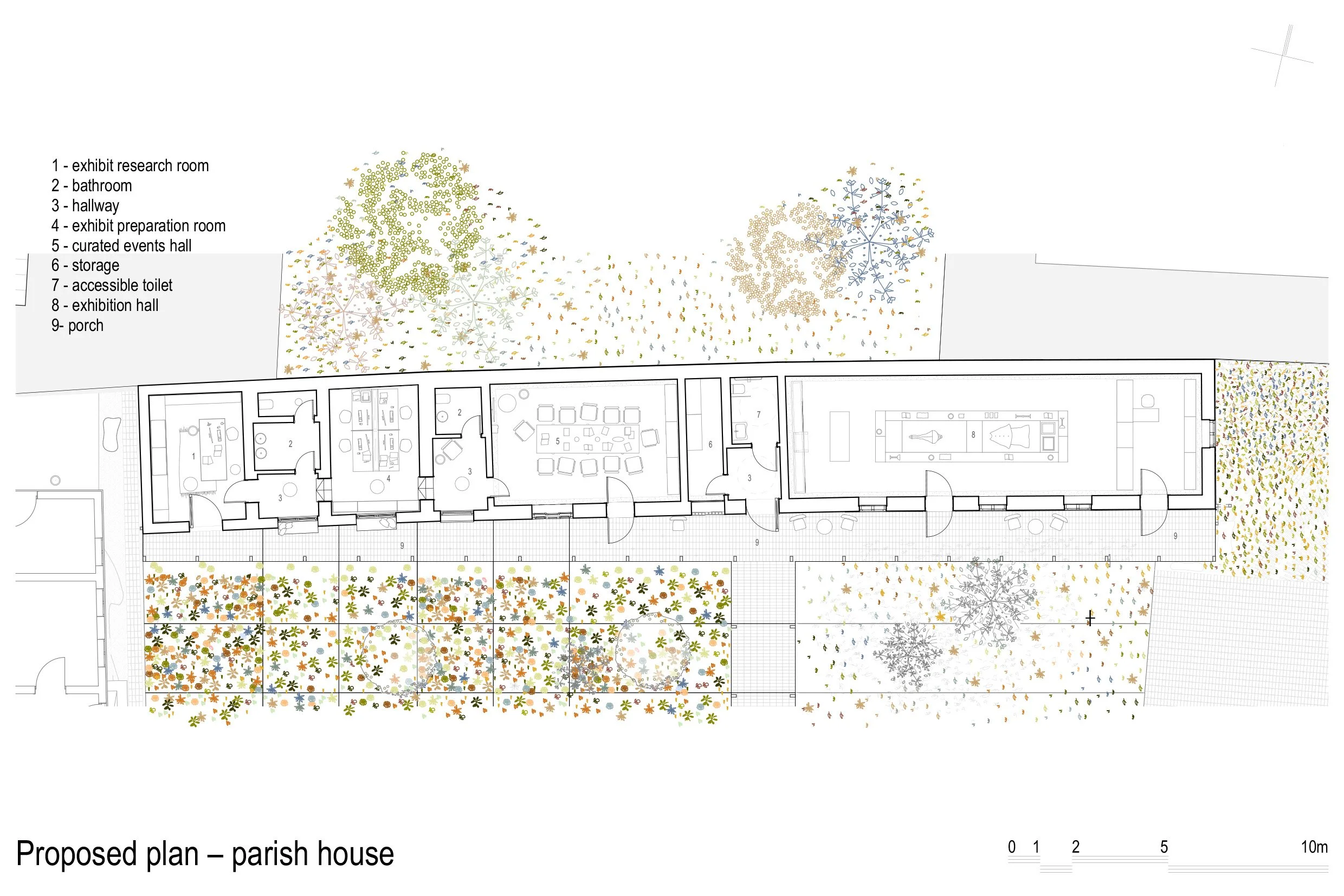
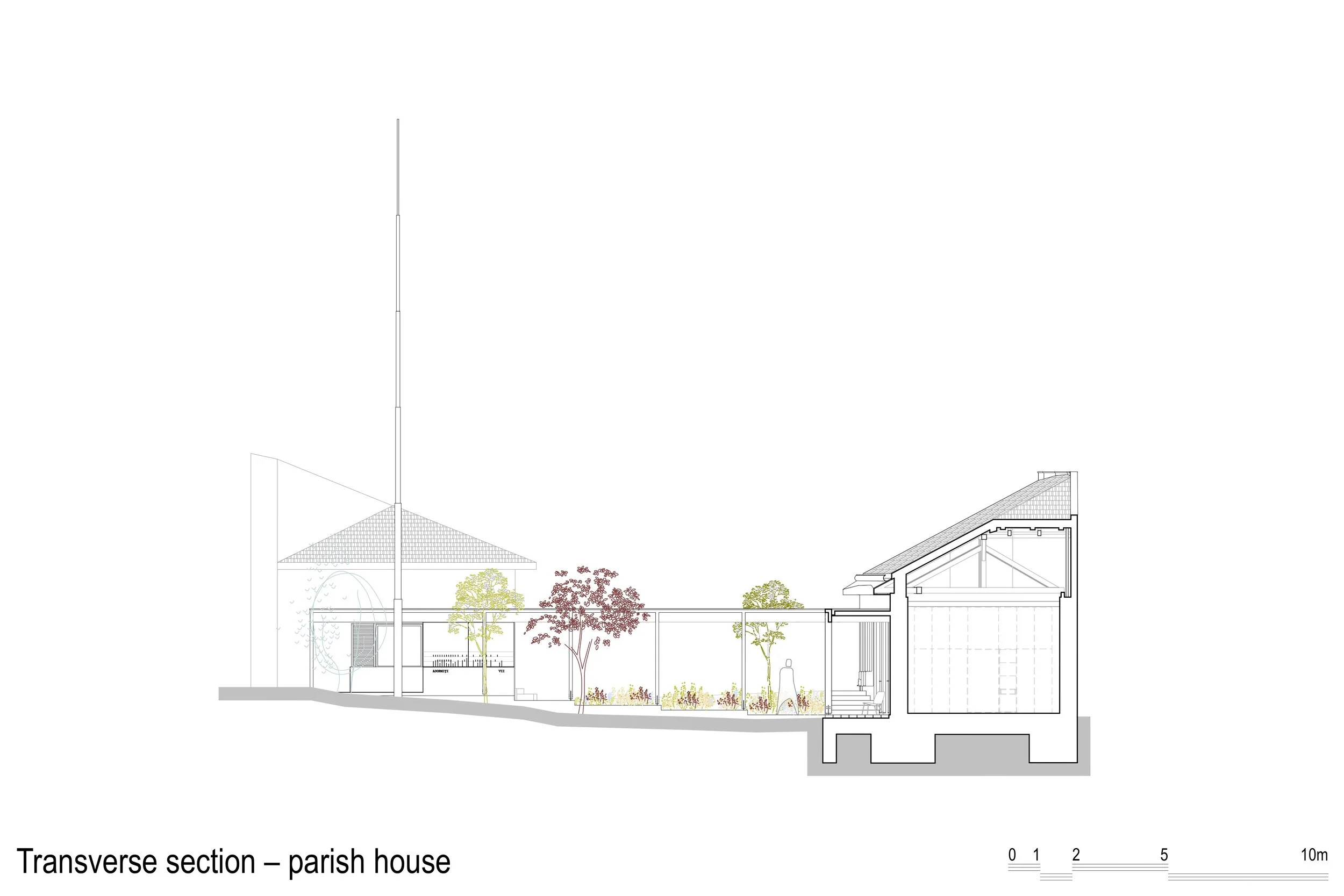
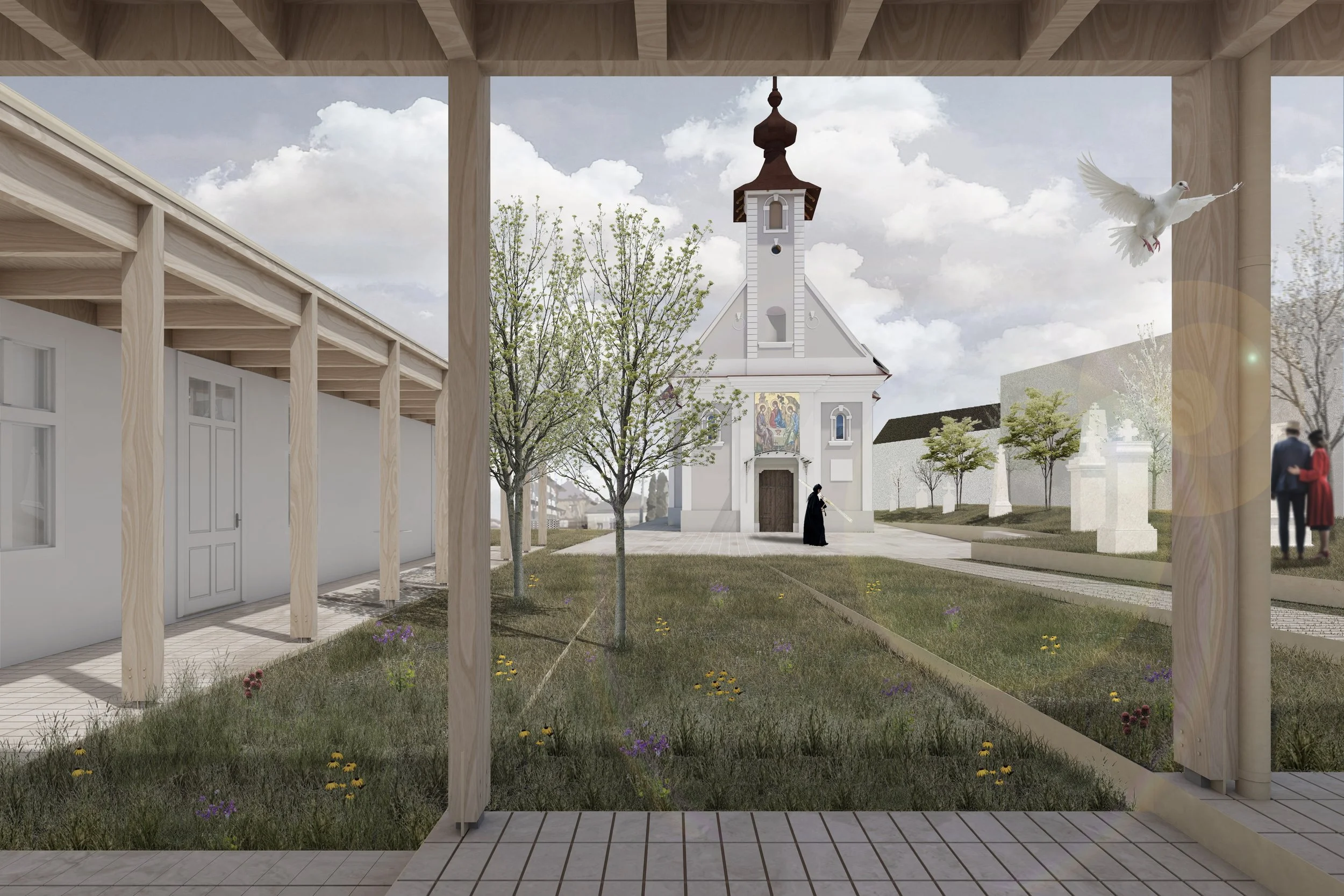

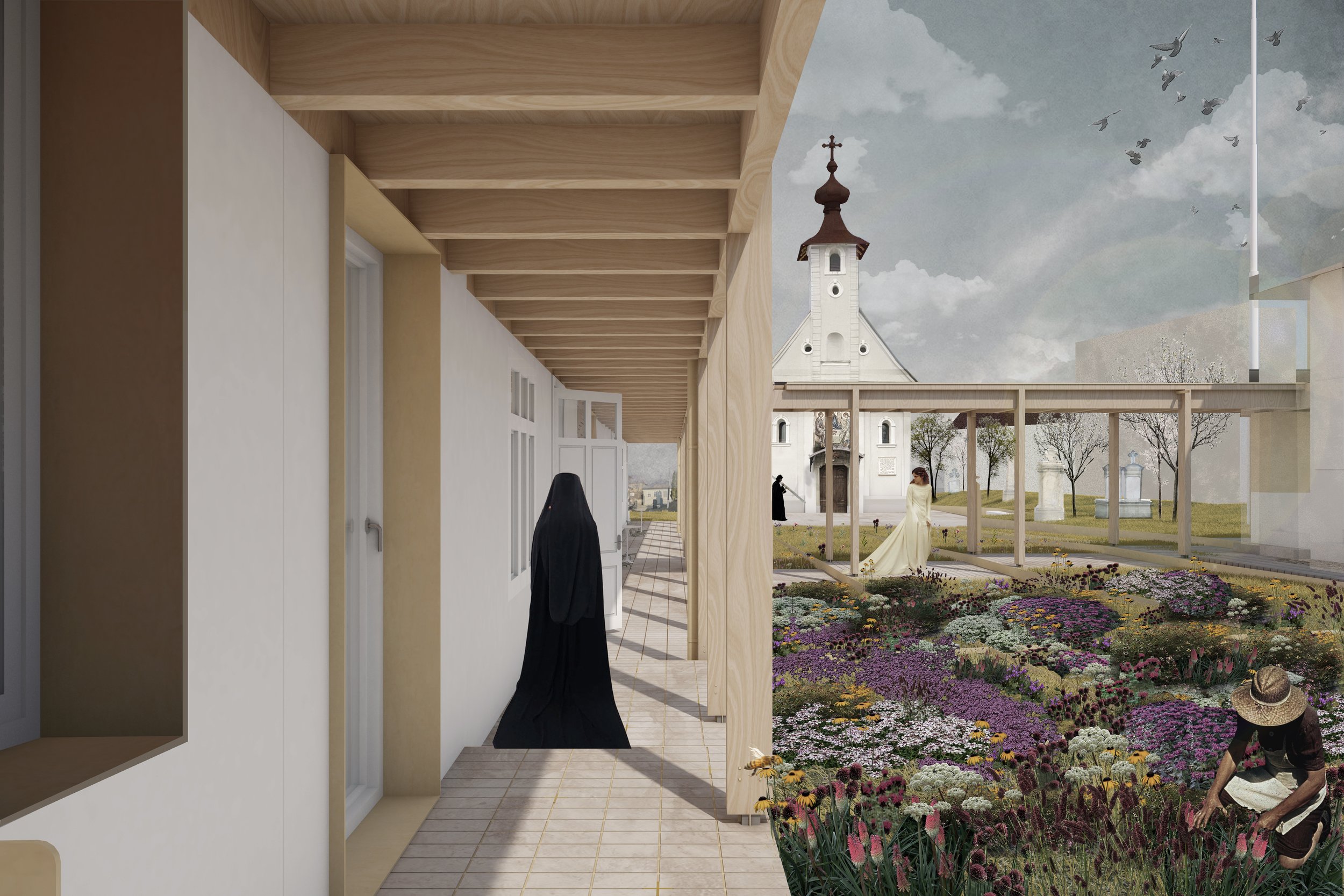
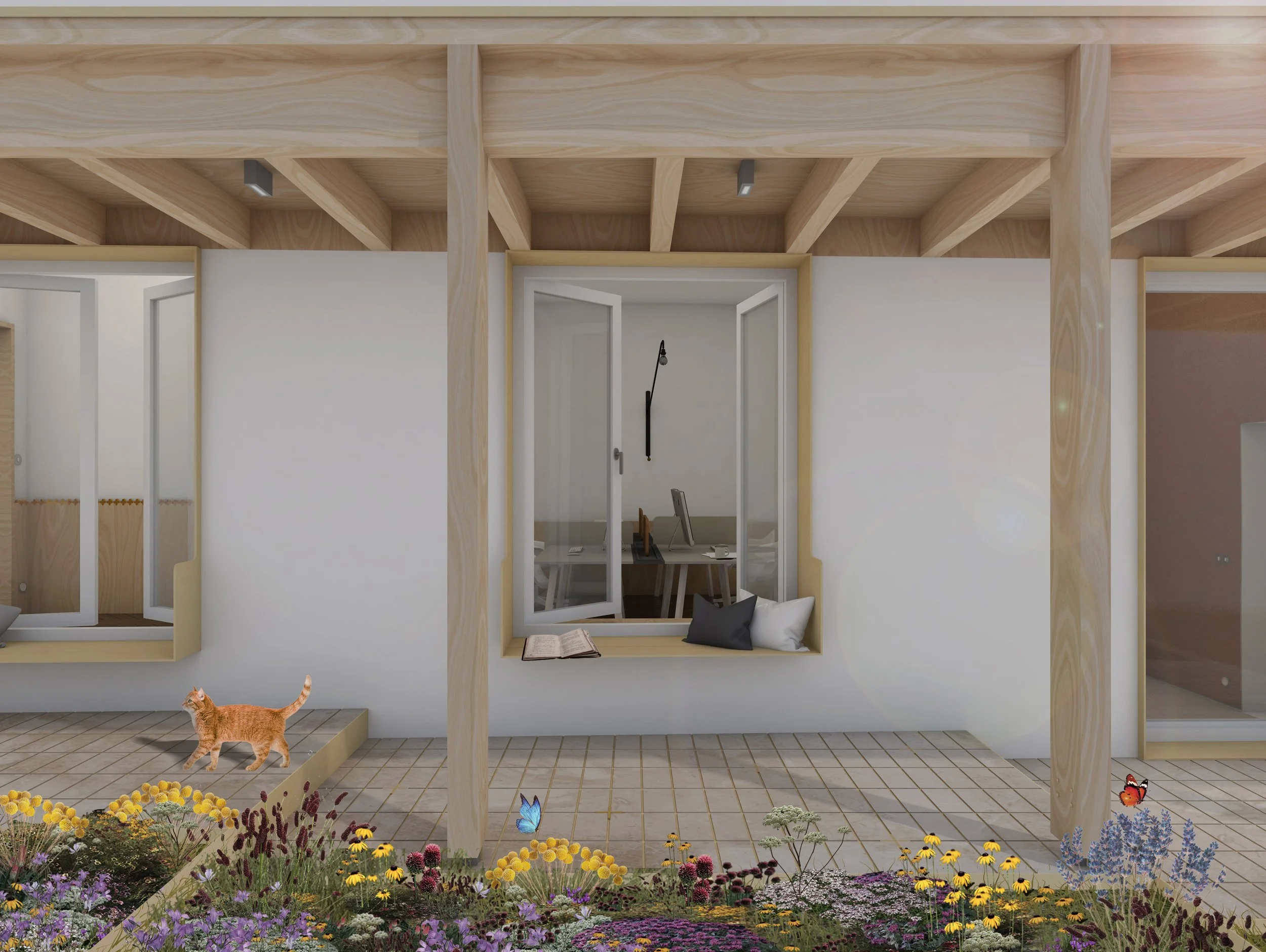
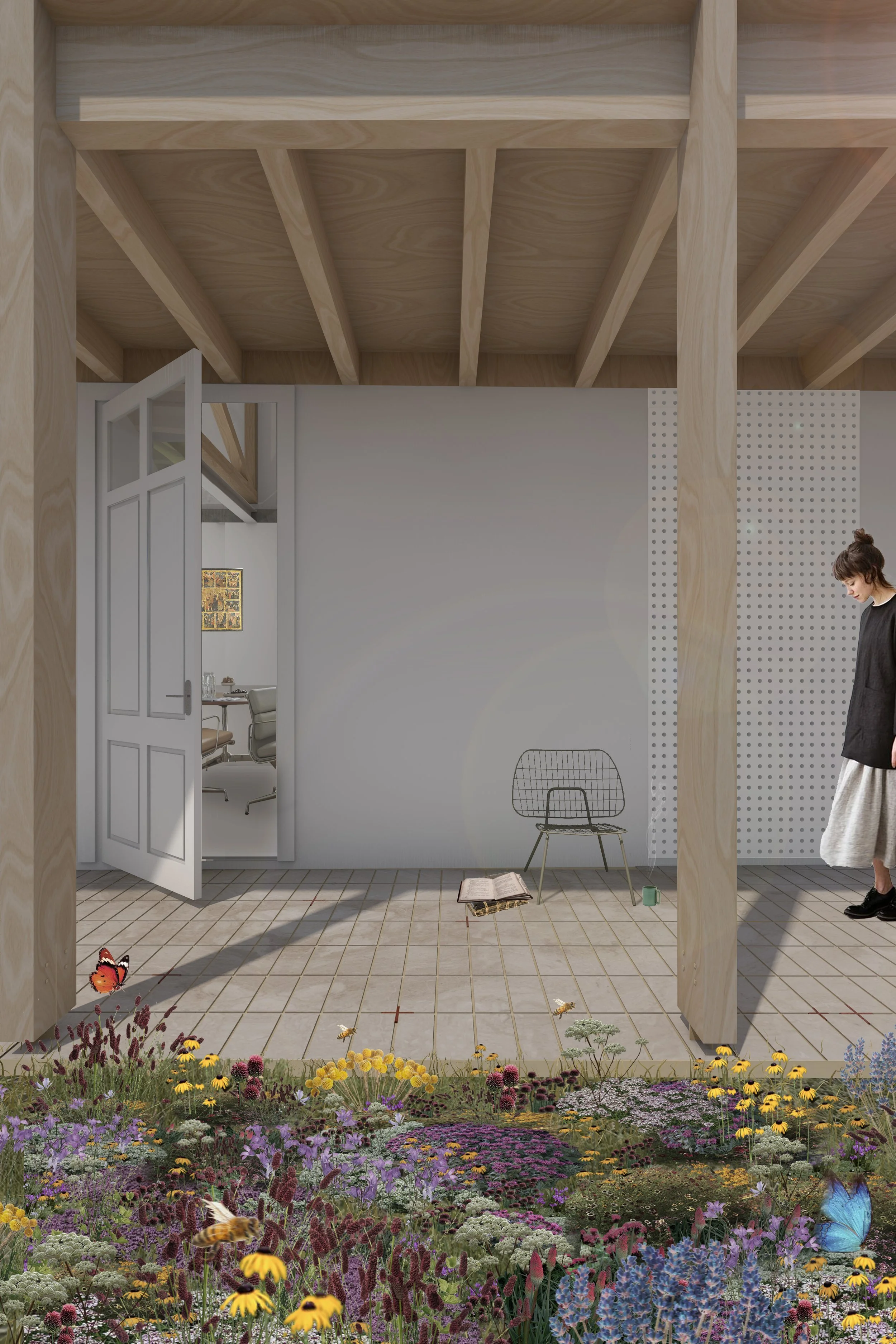
The rehabilitation of the Holy Trinity Church complex reinterprets a late 18th-century monument not as an isolated object, but as a church-in-a-garden - echoing the traditional rural condition of Romanian churches set within orchards, where fruit trees and gravestones coexist in a symbolic “place of greenery.” This typology, rooted in vernacular culture and biblical imagery, positions landscape as an essential architectural medium rather than a secondary setting.
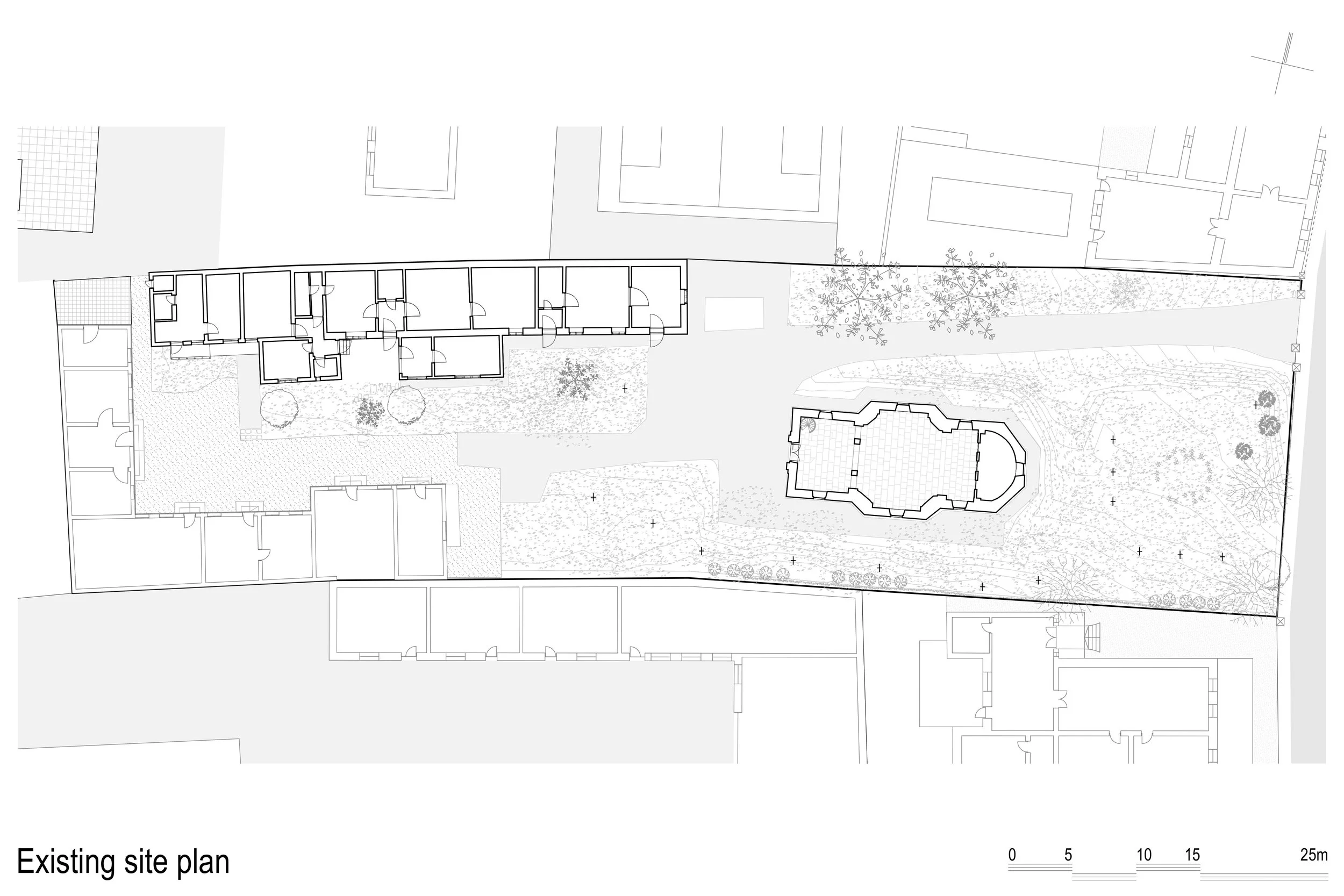
Built between 1795–1796 and listed as a protected historic monument, the church occupies a transitional urban condition within a protected residential fabric. The project addresses both the church and the former parish house, repositioning the ensemble as a permeable civic and cultural anchor within the neighbourhood.
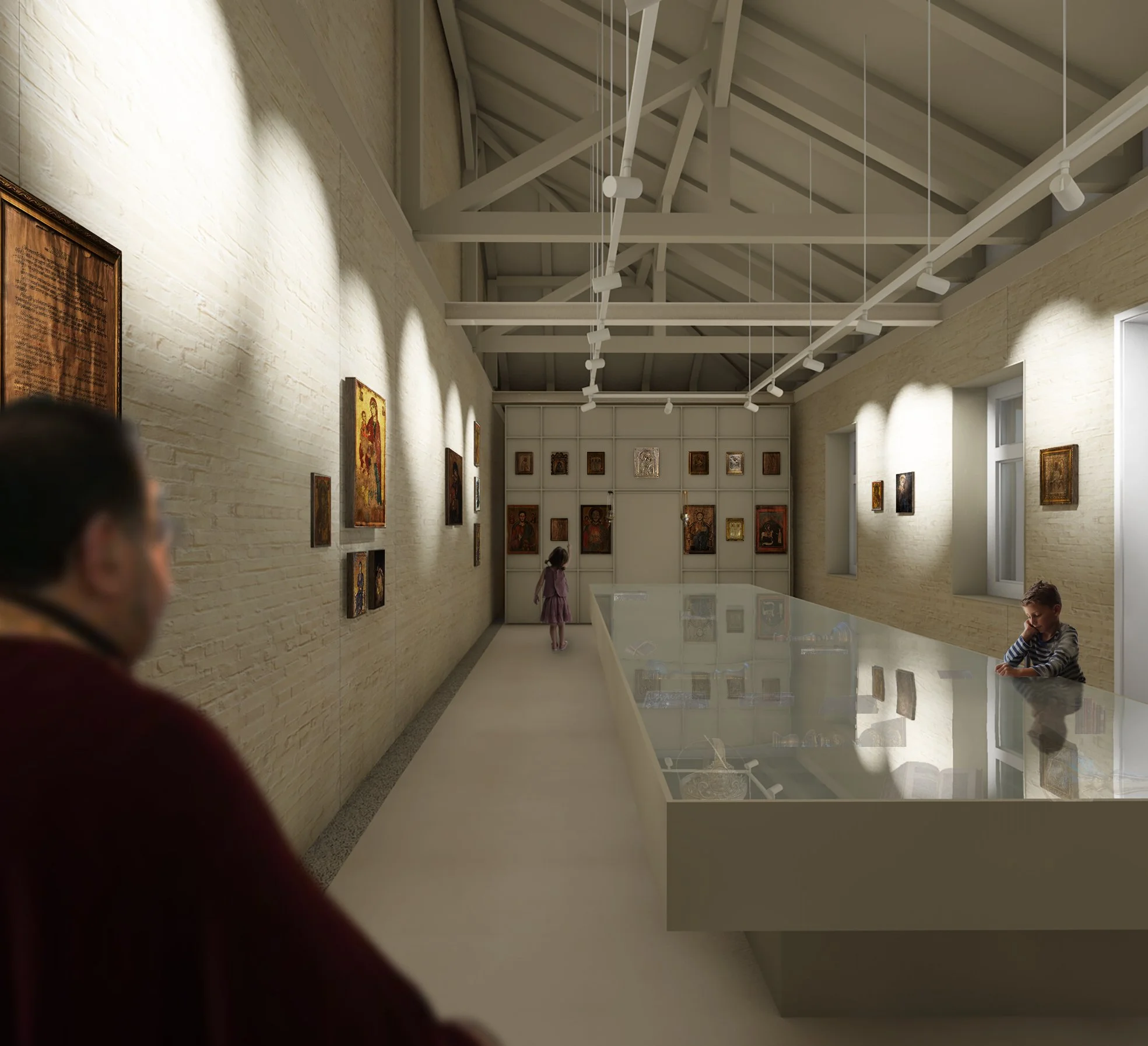
The intervention strategy is grounded in calibrated conservation. Structural consolidation respects the original load-bearing masonry system - stone and brick walls up to 110 cm thick, brick vaults, timber roof structures and later reinforced concrete insertions in the choir zone - while addressing vulnerabilities through compatible, minimally invasive measures. Inappropriate past repairs are corrected, architectural stone elements are carefully restored, and material authenticity is prioritised over cosmetic effect. The parish house is adapted from residential use to cultural functions, strengthening the public dimension of the complex while maintaining its volumetric hierarchy.
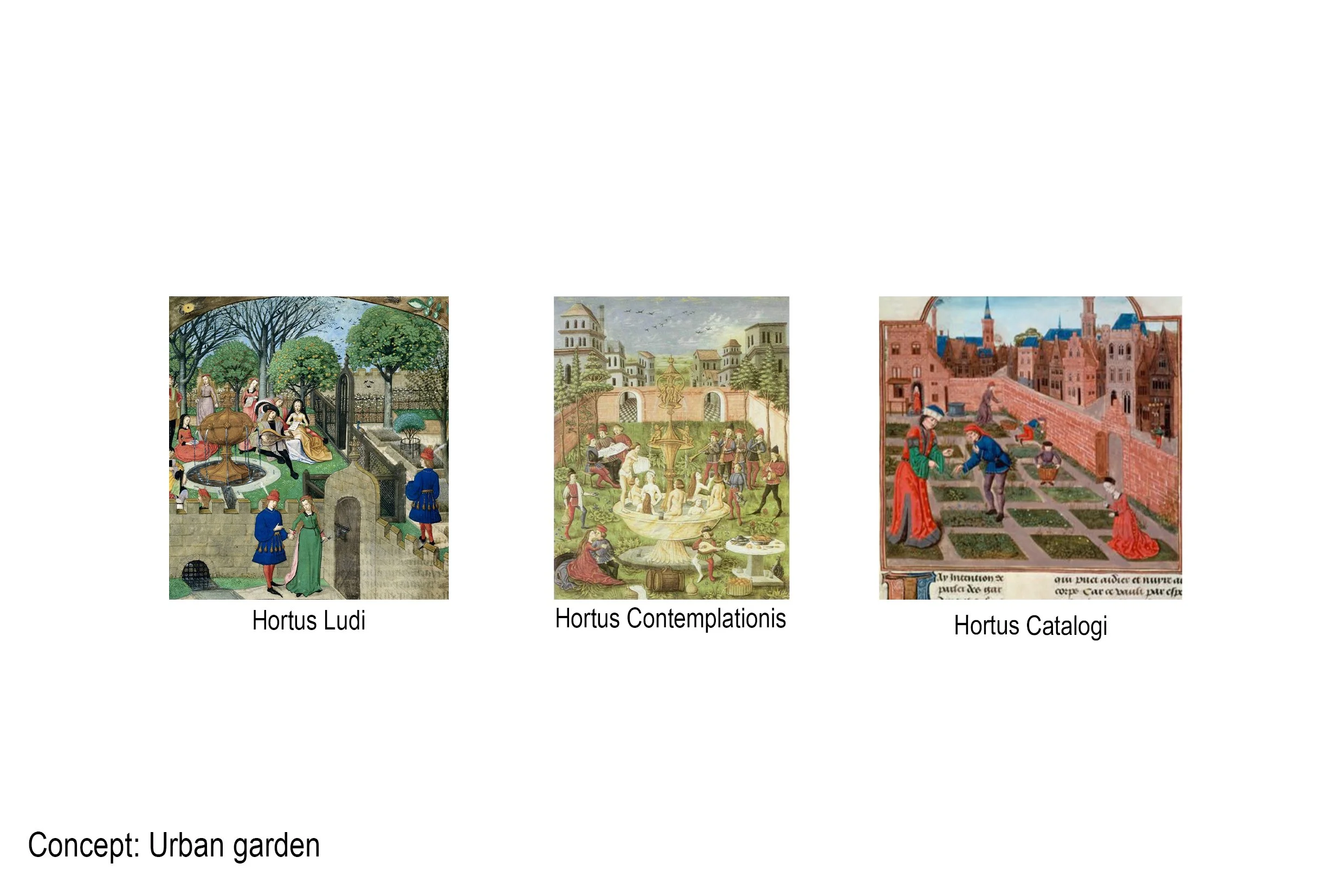
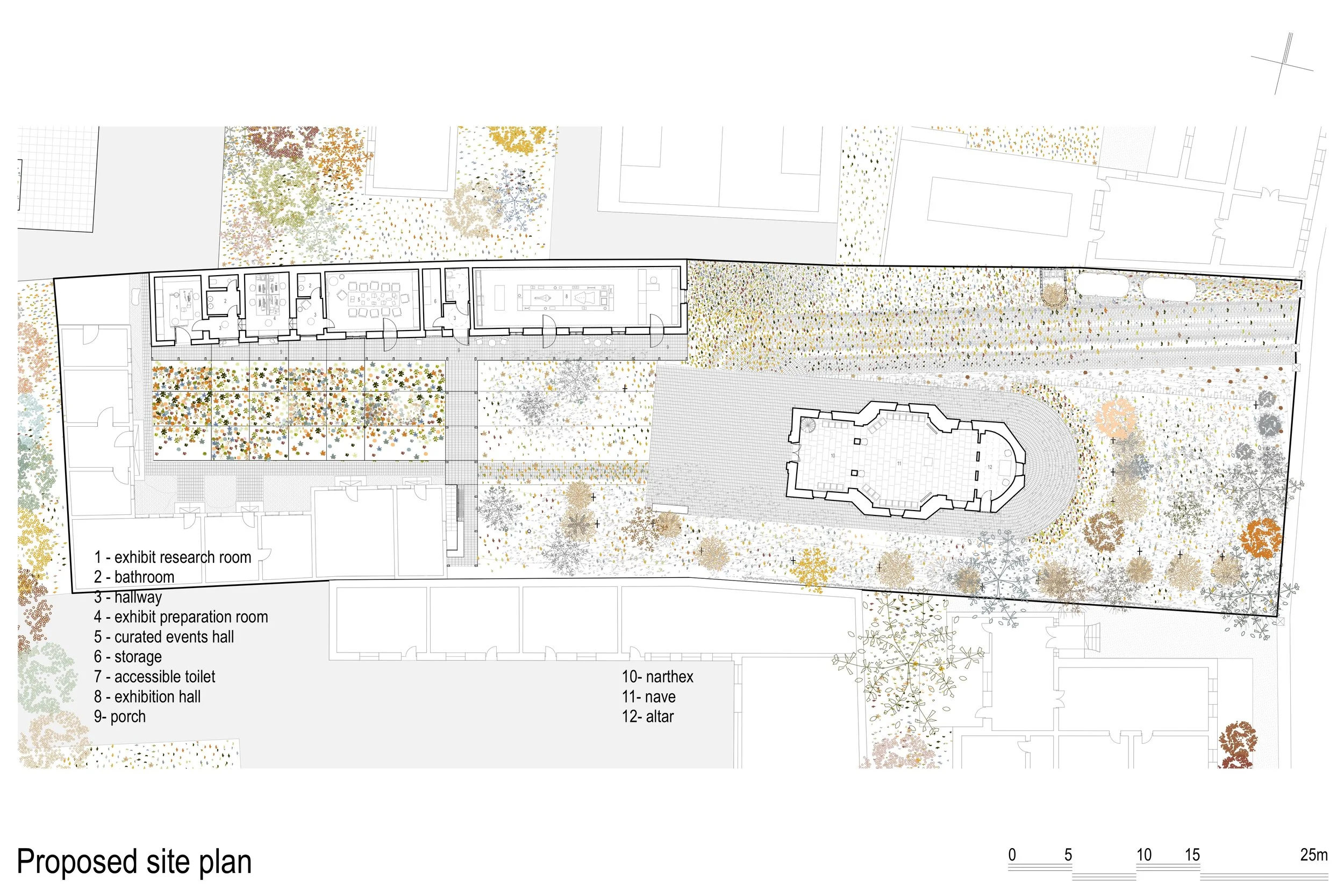
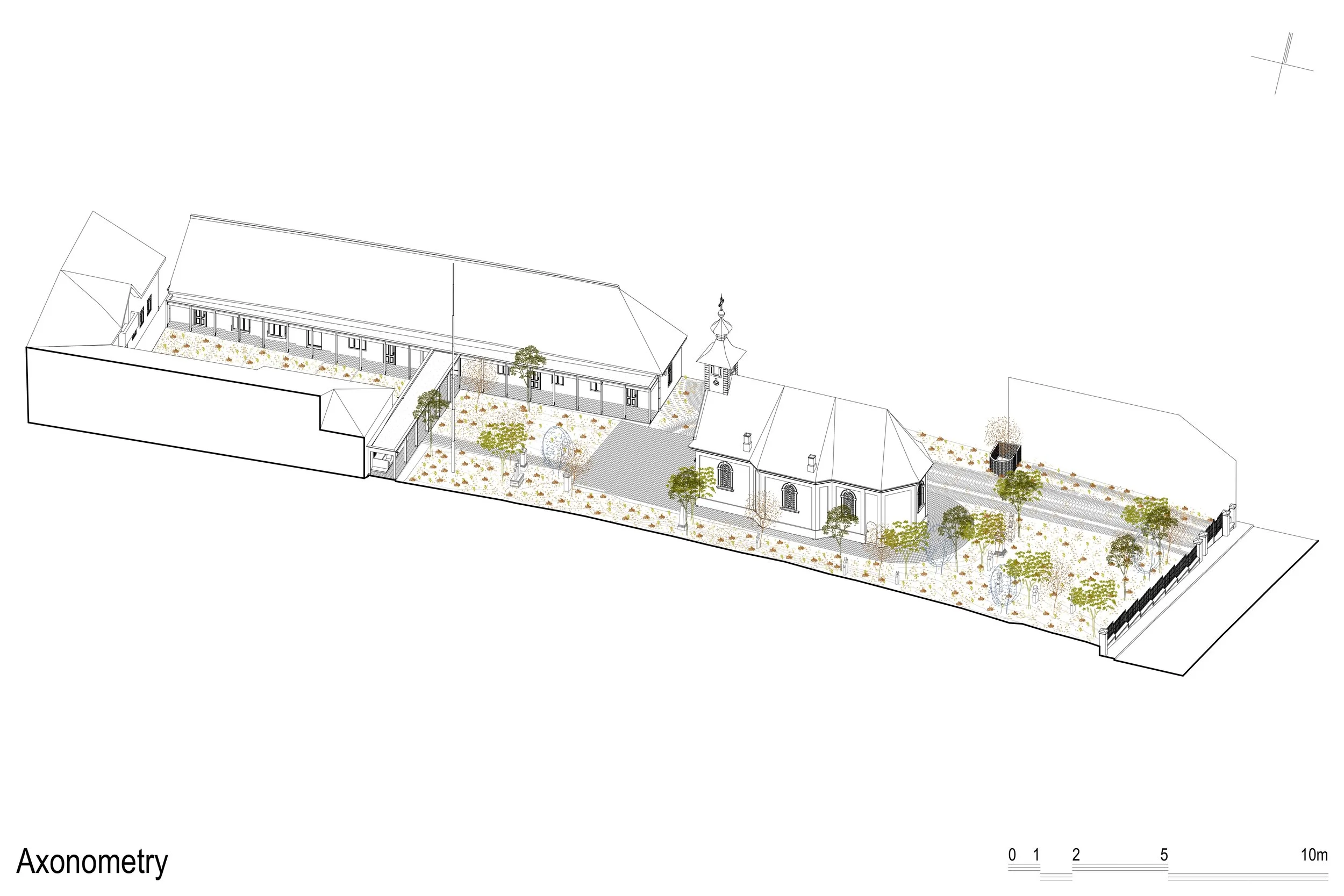
The courtyard is reconceived as a contemporary hortus conclusus, structured into two complementary domains: a hortus ludi, open to community use and to both formal and informal gathering, and a more intimate hortus catalogi, curated as a contemplative garden for the parish. Hard surfaces are reduced, parking is minimised, and green space expanded, recalibrating the environmental and spatial balance of the site.
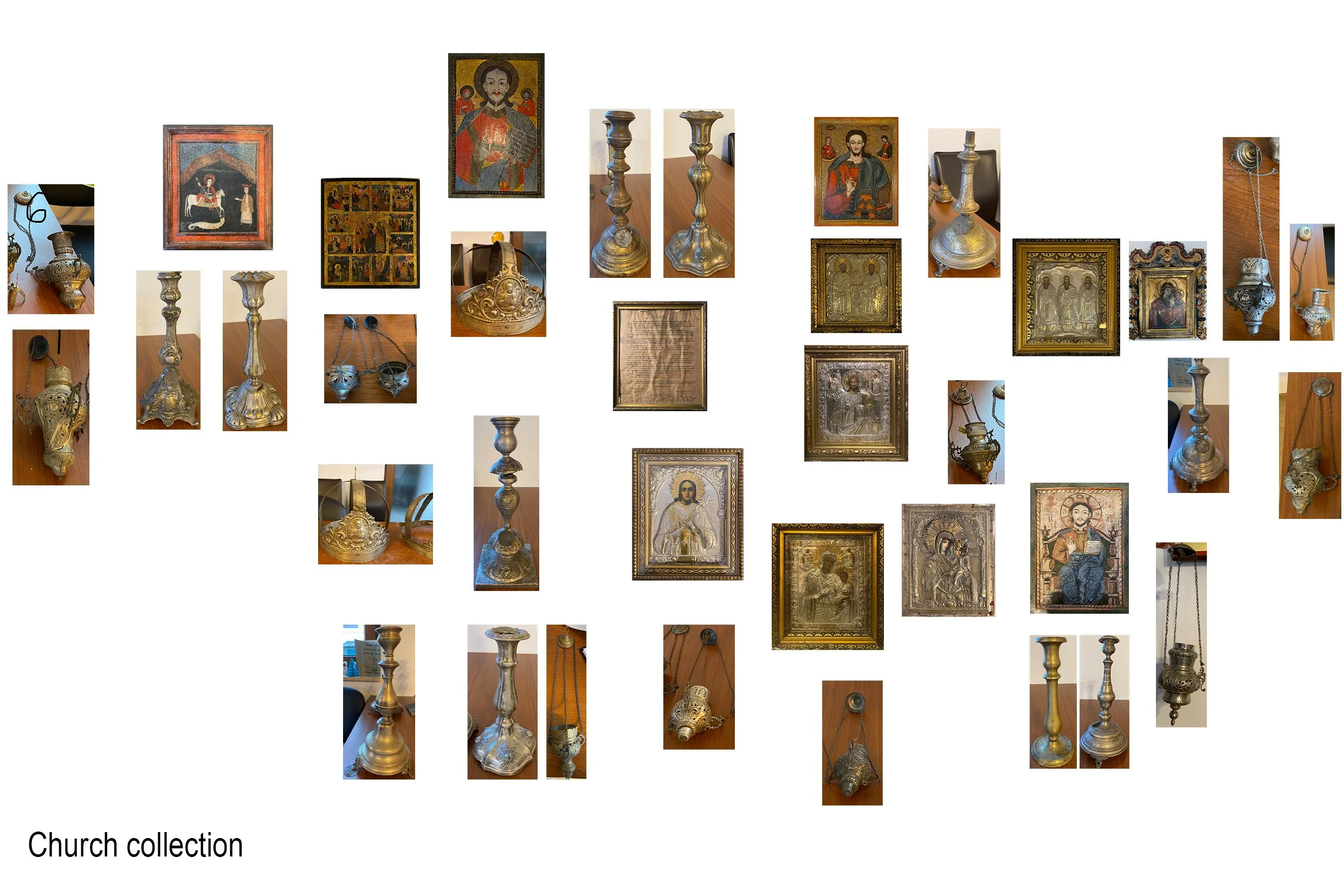
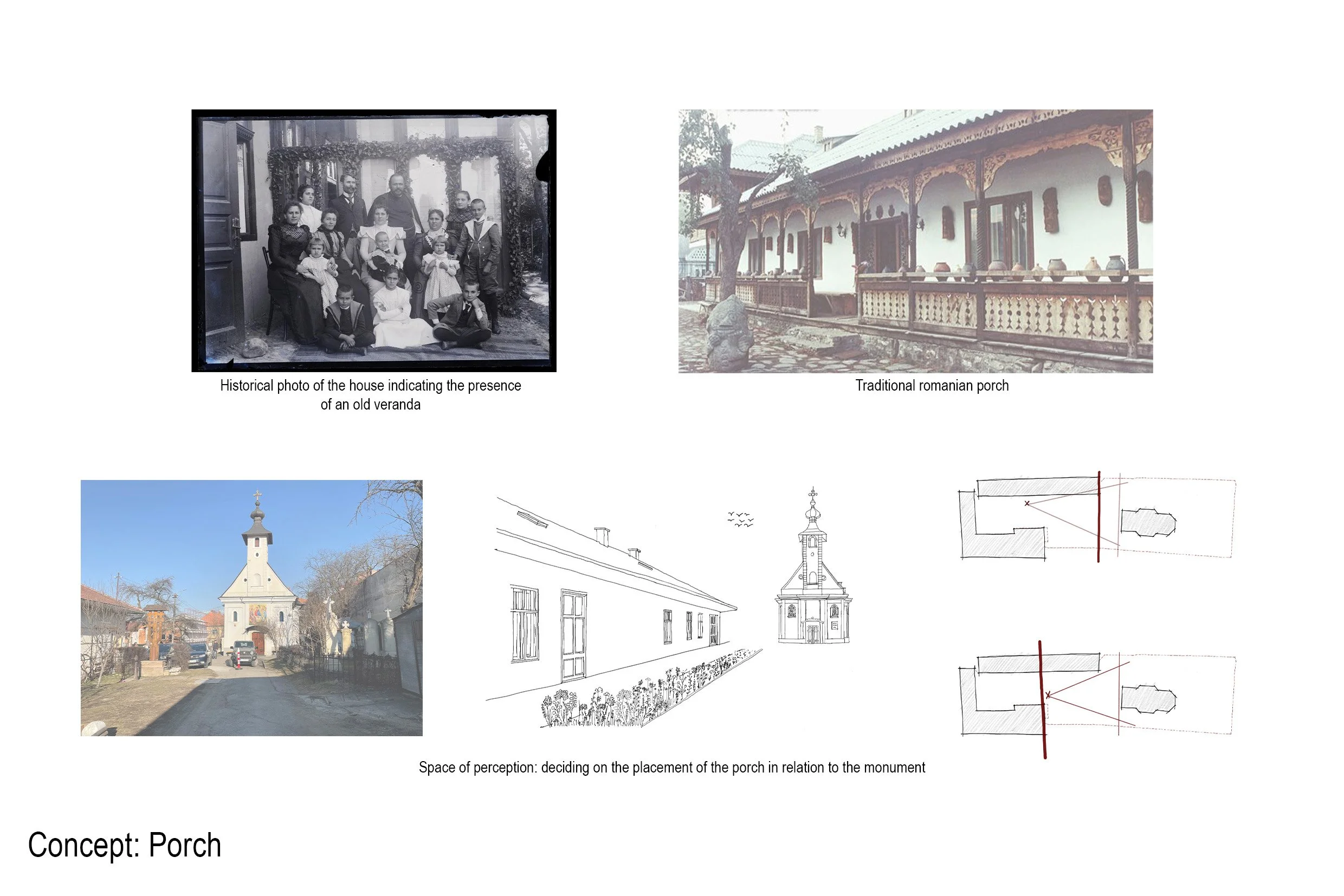
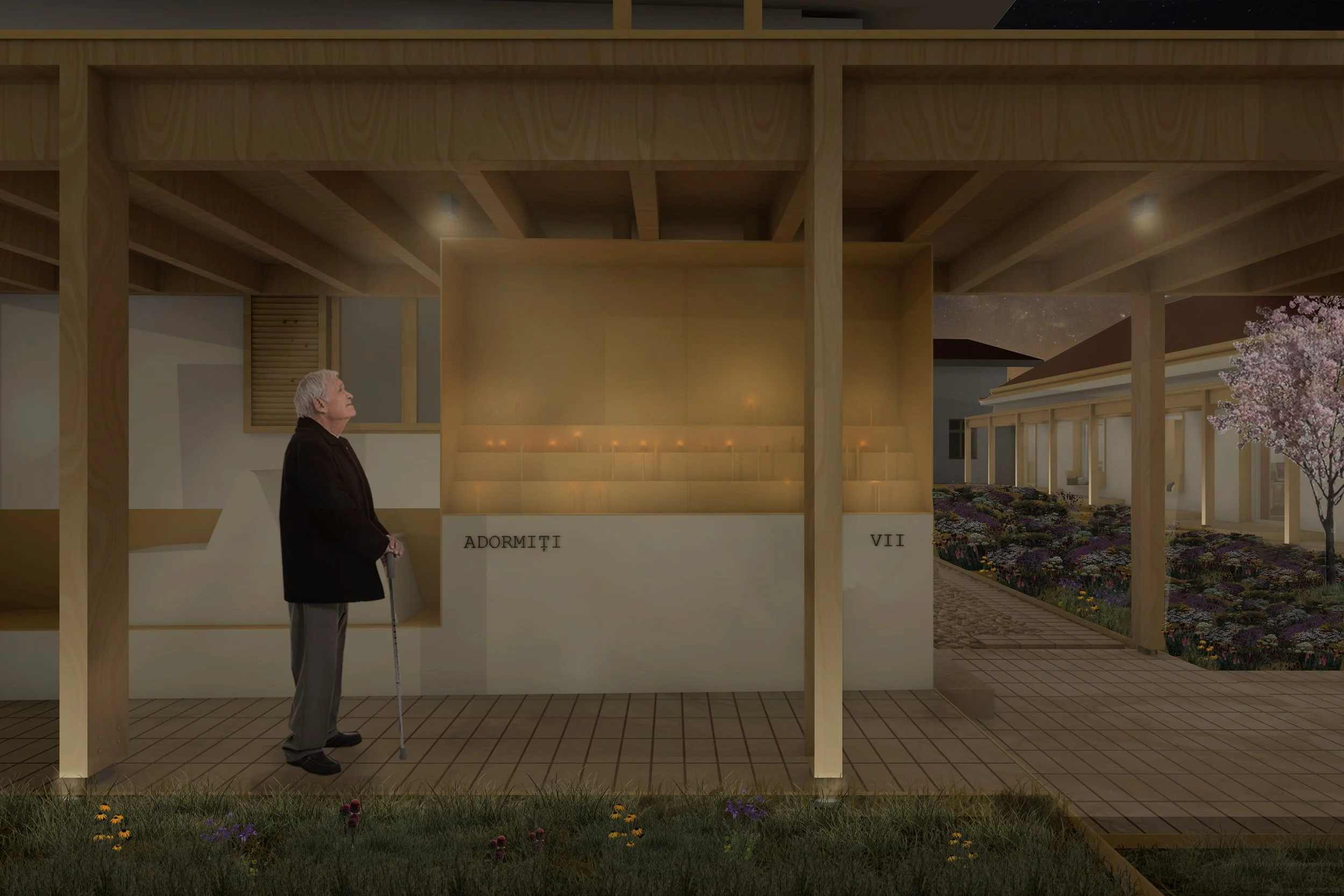
A new T-shaped porch mediates these layers. Reinterpreting the former parish veranda, it preserves the western perception of the monument while acting as a spatial threshold between the two gardens. Beyond its evocative role, it shelters the new candle pavilion and frames an exterior lapidarium protecting historic funerary stones from weather exposure.
Rather than foregrounding formal contrast, the project advances a precise and ethical model of intervention - integrating conservation, landscape restructuring and programmatic revitalisation into a coherent cultural landscape where architecture and garden become inseparable.
Design Team: Paul-Mihai Moldovan, Anamaria Moldovan, Flavia Marginean, Simina Nicoleta
Collaborator[s]: Lamina, Grad Instal, Expert Proiect, Structonica, Eclectic, Rest Arh, BIOHARCOM, GRT Consulting, Geoground Solutions, INSERT Studio, Geognozis, Szabolcs István Guttman
Design Year: 2021-2022
Status: Under Construction
Execution | Completion Year: on going
Location: Cluj-Napoca, Romania
Gross area: 972 sqm
General Contractor: ADD Concept, AB Grup Construct
Text: ateliercetrei
Photographer[s]: -